

Voices of the Manhattan Project
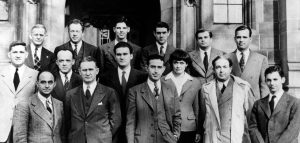
Reunion of Chicago Met Lab scientists, December 2, 1946.
“Voices of the Manhattan Project” is a joint project by the Atomic Heritage Foundation and the Los Alamos Historical Society to create a public archive of our oral history collections of Manhattan Project veterans and their families.
Our online collection features 600 audio/visual interviews with Manhattan Project workers and their families, including J. Robert Oppenheimer, General Leslie R. Groves, Glenn Seaborg, Hans and Rose Bethe, George and Vera Kistiakowsky, and many more.
“Voices” includes interviews with some of the men who flew on the atomic bombing missions. Our “Voices from Japan” section includes interviews with atomic bomb survivors, the mayors of Hiroshima and Nagasaki, and experts on the bombings and their impacts.